I'm an international teacher in Abu Dhabi. I am seeking new ways to support teachers. I am the face behind the Laney Lee science resources that you love!
Let me be real: I’ve taught middle school science in classrooms where chaos was the norm—students constantly moving, limited materials, and no dedicated lab space. The idea of running a complicated evolution lab used to feel completely unrealistic.
That’s exactly why I started creating science labs that are simple, engaging, and realistic for everyday classrooms.
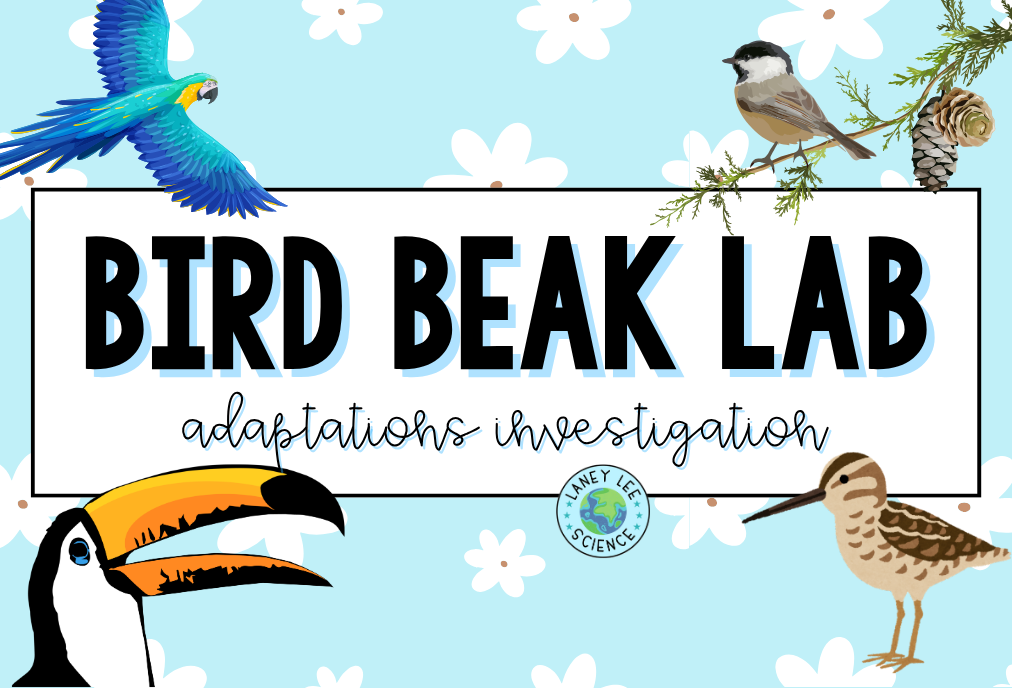
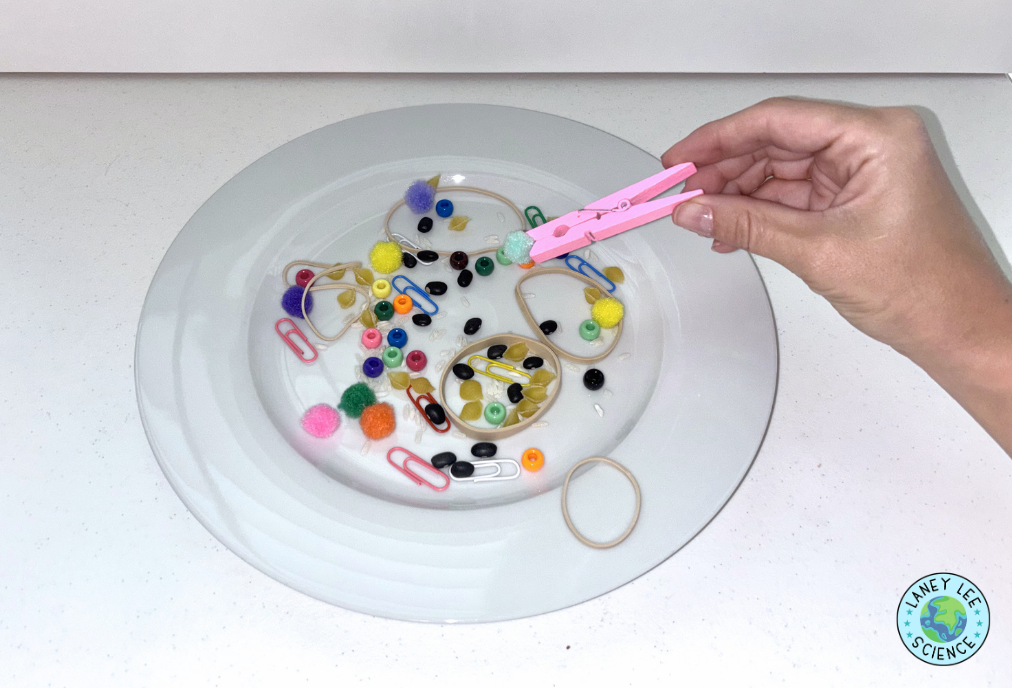
This Bird Beak Simulation Lab is one of my favorite ways to teach adaptations and natural selection because students immediately get it. Using everyday classroom tools as “bird beaks,” learners compete to collect different food sources and quickly discover that certain beak shapes work better for certain foods. Suddenly, concepts like adaptation, competition, and survival aren’t abstract anymore—they’re happening right in front of them.
Not only does this activity align beautifully with NGSS 3-LS4-2 and 3-LS4-3, but it also gives students the chance to collect real data, analyze patterns, and support scientific claims with evidence. Students naturally begin asking deeper questions about evolution, ecosystems, and why species develop different traits over time.
And best of all? The setup is simple, inexpensive, and totally manageable—even in a chaotic classroom.
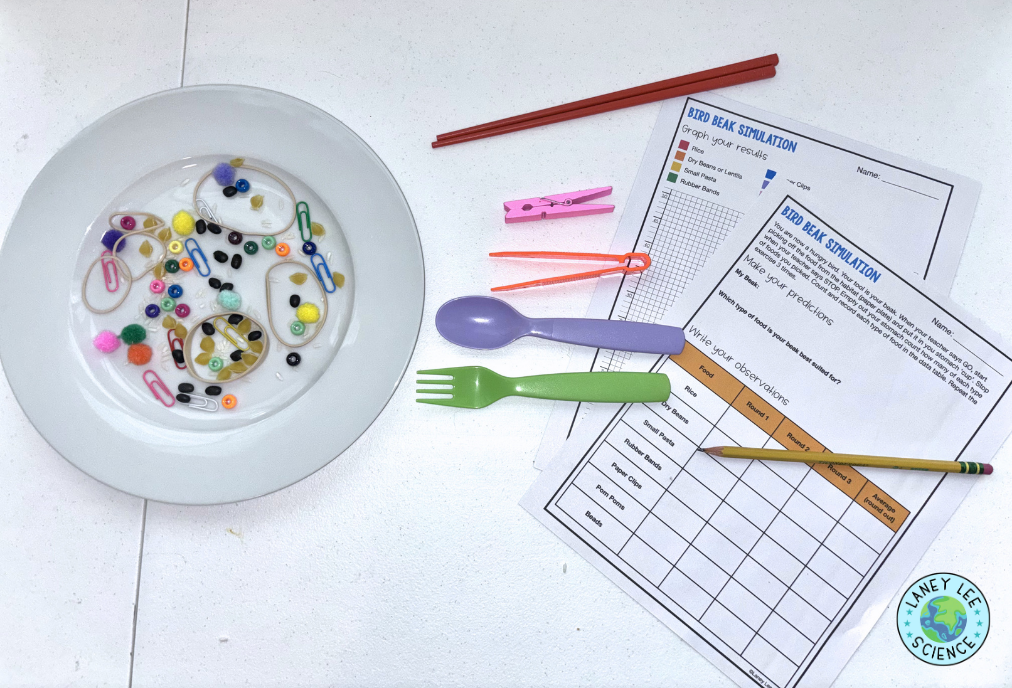
Part 1: Set Up the Habitat Students mix all food items onto a paper plate to create a shared habitat with limited resources.
Part 2: Make Predictions Each student chooses a “beak” tool and predicts which food source it will collect most efficiently.
Part 3: Feeding Simulation Using only their assigned beak, students race to collect as much food as possible within 30 seconds while following strict feeding rules.
Part 4: Record Data Students count how many of each food item they collected and record results in a data table.
Part 5: Repeat Trials The feeding simulation is repeated multiple times to improve reliability and identify patterns.
Part 6: Analyze Results Students calculate averages, graph class data, and compare which beaks were best adapted for specific food sources.
Part 7: Connect to Natural Selection Through discussion and post-lab questions, students explain how adaptations improve survival and why certain traits become more common over time.
LANEY'S TIPS FOR SUCCESS
Set clear feeding rules upfront. The “one food item at a time” rule keeps the simulation fair and realistic.
Use mixed food textures and sizes. The variety makes adaptation patterns much more obvious.
Run a practice round first if your students are extra energetic.
Have students defend their claims with evidence. Push them to reference actual data, not opinions.
Discuss real birds afterward. Students love connecting the tools to actual beak adaptations in nature.
CONCLUSION
The Bird Beak Simulation Lab is a simple but powerful way to help students understand how adaptations influence survival. By competing for limited resources with different “beak” tools, learners experience natural selection in action and see firsthand why no single trait is best for every environment. It’s engaging, data-driven, easy to manage, and one of those labs students remember long after the unit ends.