I'm an international teacher in Abu Dhabi. I am seeking new ways to support teachers. I am the face behind the Laney Lee science resources that you love!
Let me be real: teaching ecosystems and predator-prey relationships can feel surprisingly abstract for middle school students. Kids hear words like population dynamics and limiting factors, but actually understanding how one species affects another? That’s a lot harder.
That’s exactly why I started creating science labs that are simple, engaging, and realistic for everyday classrooms.
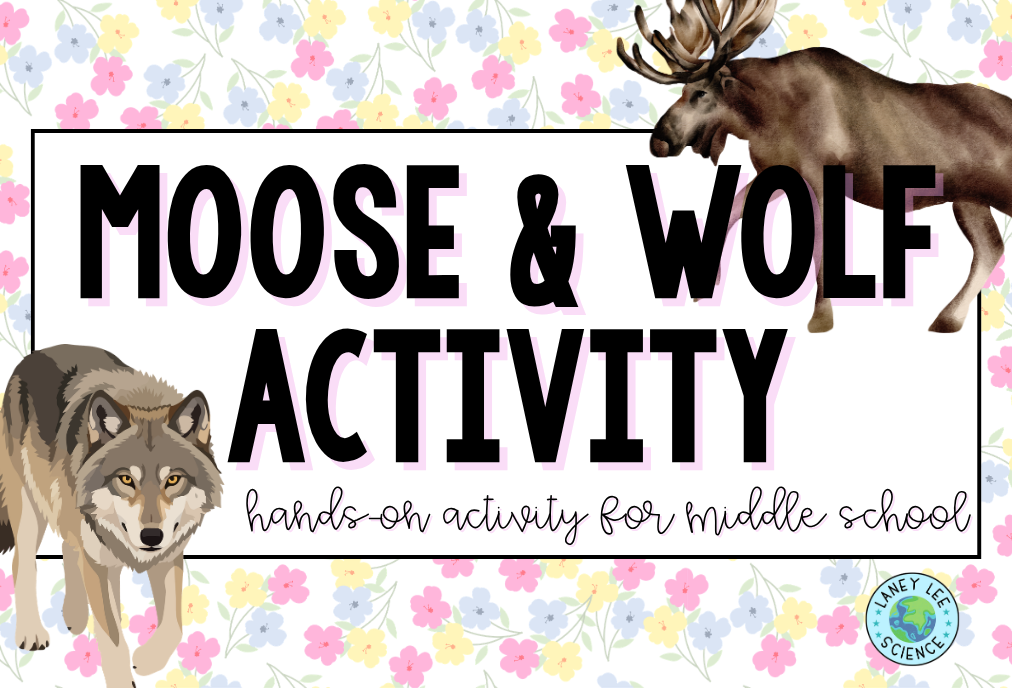
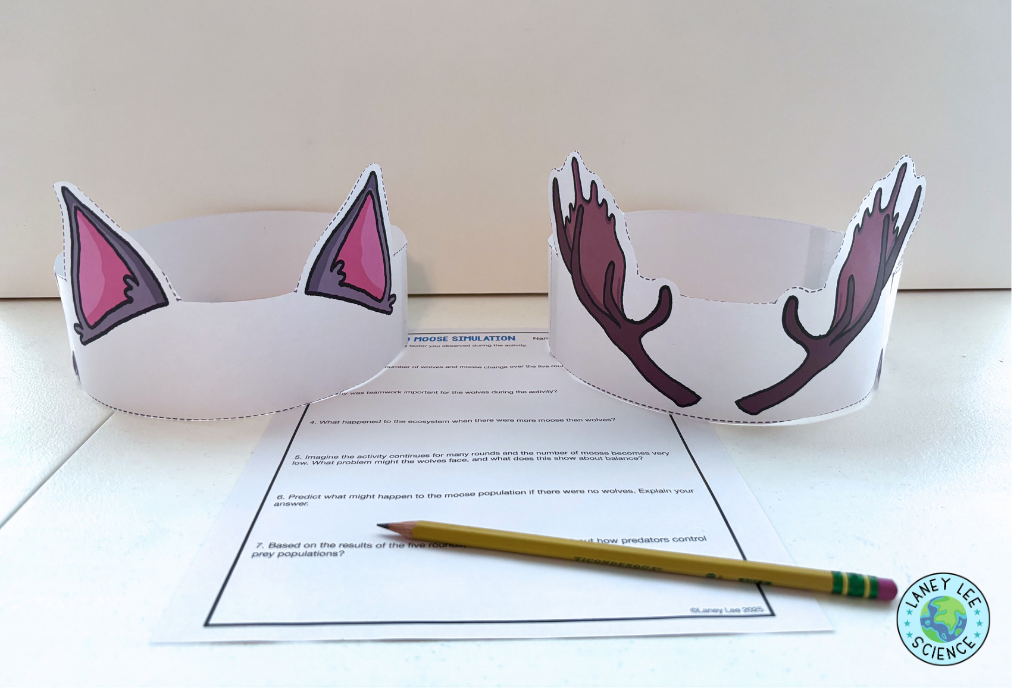
This Wolves and Moose Simulation Lab turns ecology into an active, memorable experience students genuinely enjoy. Instead of just reading about predator-prey relationships, students become the wolves and moose. Through movement, teamwork, data collection, and graphing, learners quickly see how changes in one population directly affect another and why ecosystems depend on balance.
Not only does this activity align beautifully with NGSS MS-LS2-1 and MS-LS2-2, but it also encourages students to think critically about limiting factors, population changes, food availability, and ecosystem stability. As the rounds continue, students naturally begin noticing patterns and predicting what will happen next—exactly the kind of scientific thinking we want in middle school science.
And best of all? It requires very little prep and gets students moving in a purposeful, structured way.
Students are split into two populations: a larger group of moose and a smaller group of wolves.
Step 2: Begin the Simulation
Moose attempt to cross the ecosystem safely while wolves work together to tag them. A moose is only “captured” if wolves cooperate as a team.
Step 3: Record Population Data
At the end of each round, students count the number of wolves and moose remaining and record the data. Tagged moose become wolves in the next round.
Step 4: Repeat Over Multiple Rounds
The simulation continues for five rounds so students can observe how the populations change over time.
Step 5: Analyze Patterns
Students graph the predator and prey populations, identify trends, and explain how predator-prey relationships affect ecosystem balance.
laney's tips for success
Set clear movement boundaries before starting. This keeps the activity controlled and safe.
Emphasize teamwork for wolves. Students quickly discover that cooperation matters in predator survival.
Use a whistle or timer to stop rounds quickly and reset efficiently.
Have students predict before each round. Their predictions become much more thoughtful as patterns emerge.
Debrief afterward while the excitement is fresh. Students make incredible real-world connections immediately after the simulation.
Conclusion
The Wolves and Moose Simulation Lab is an engaging, movement-based way to help students understand predator-prey relationships and ecosystem balance. By modeling how wolf and moose populations change over time, students experience firsthand how organisms depend on one another and why stable ecosystems require balance. It’s active, memorable, low-prep, and one of the best ways to bring ecology concepts to life in middle school science.