I'm an international teacher in Abu Dhabi. I am seeking new ways to support teachers. I am the face behind the Laney Lee science resources that you love!
Let me be real: I’ve taught middle school science in classrooms where chaos was the norm—behavior issues, no designated lab space, and not nearly enough time. The idea of pulling off a lab felt exhausting.
That’s exactly why I started creating science labs that are simple, engaging, and realistic for everyday classrooms.
This cell membrane bubble lab is a total win. It gives students a hands-on, low-stress way to visualize how the cell membrane works using nothing more than soap, water, and straws. Through a series of interactive demonstrations, students explore how membranes stay flexible, self-repair, form pores, and create compartments, just like real cells do!
Not only does this lab align beautifully with NGSS MS-LS1-2 and MS-LS1-3, but it also transforms an abstract cellular concept into something students can see, touch, and understand.
And best of all? It’s teacher-friendly. Minimal prep. No expensive supplies. And totally doable in a single class period.
Step 1: Make the Bubble Solution Combine water, soap, and glycerin (or sugar). Stir gently to avoid foam, and let the mixture sit—overnight if possible—for stronger bubbles. I didn’t measure anything! Eyeballing it worked fine for me!
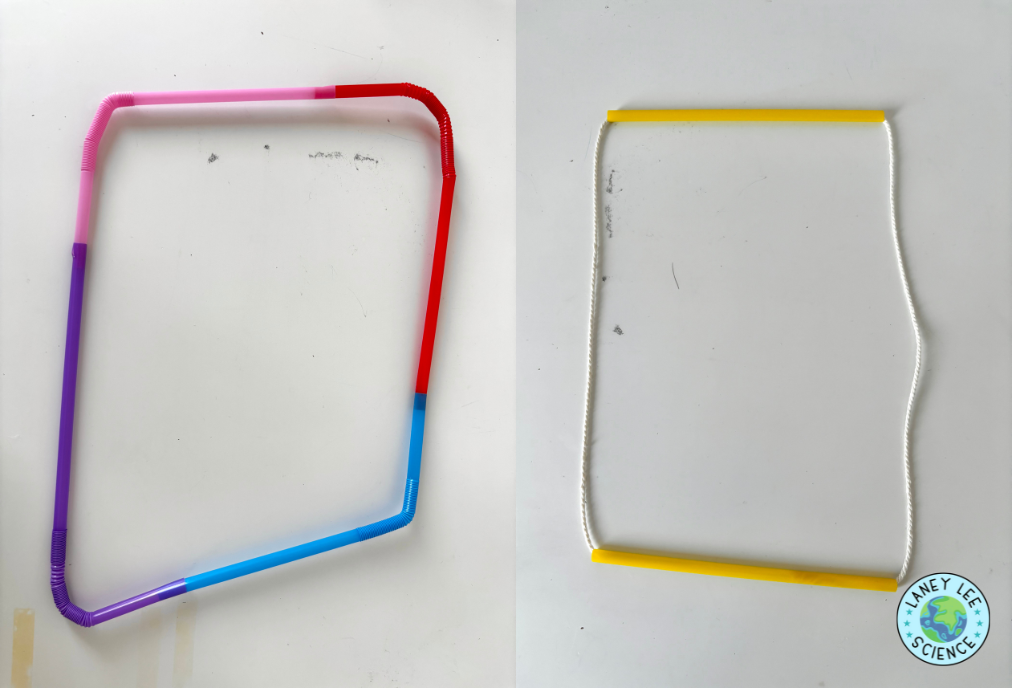
Step 2: Build a Bubble Frame I saw two versions of the bubble frame when I was researching this lab.
Option 1: Create a rectangle out of 4 straws. Attach them by cutting tiny slits in both ends of the straw so that they’re easier to fit into each other. This one is a bit harder to build, but sturdier.
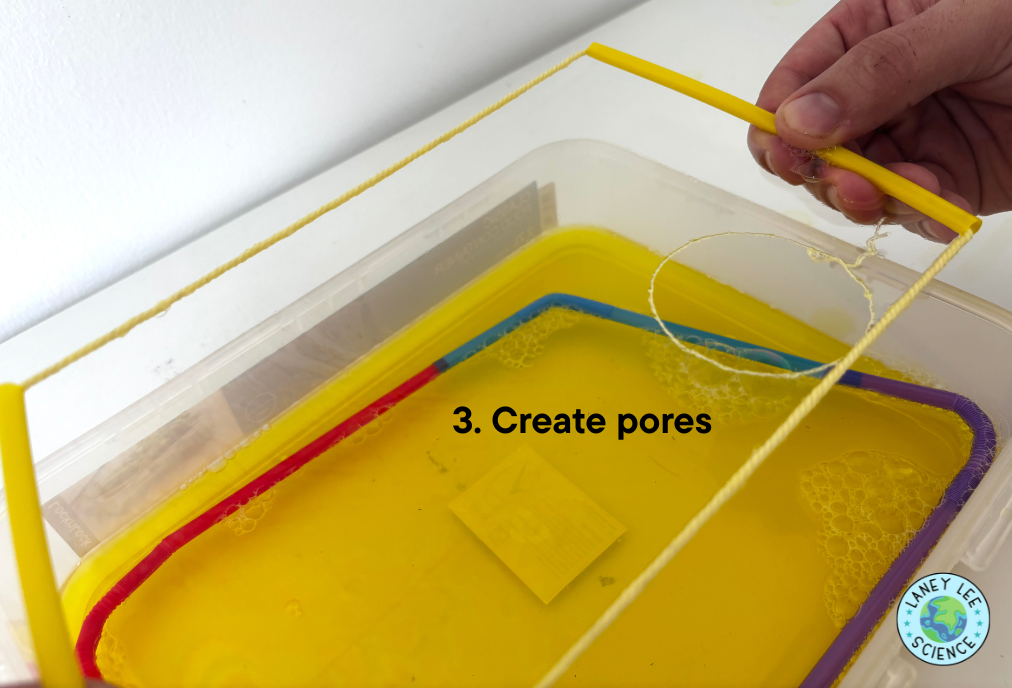
Option 2: Use one straw cut in half and thread a string through. Tie it off and hide the knot in the middle of one straw. This option is easier to build, but requires two hands to create a bubble. It must be held taut.
Step 3: Explore Membrane Properties
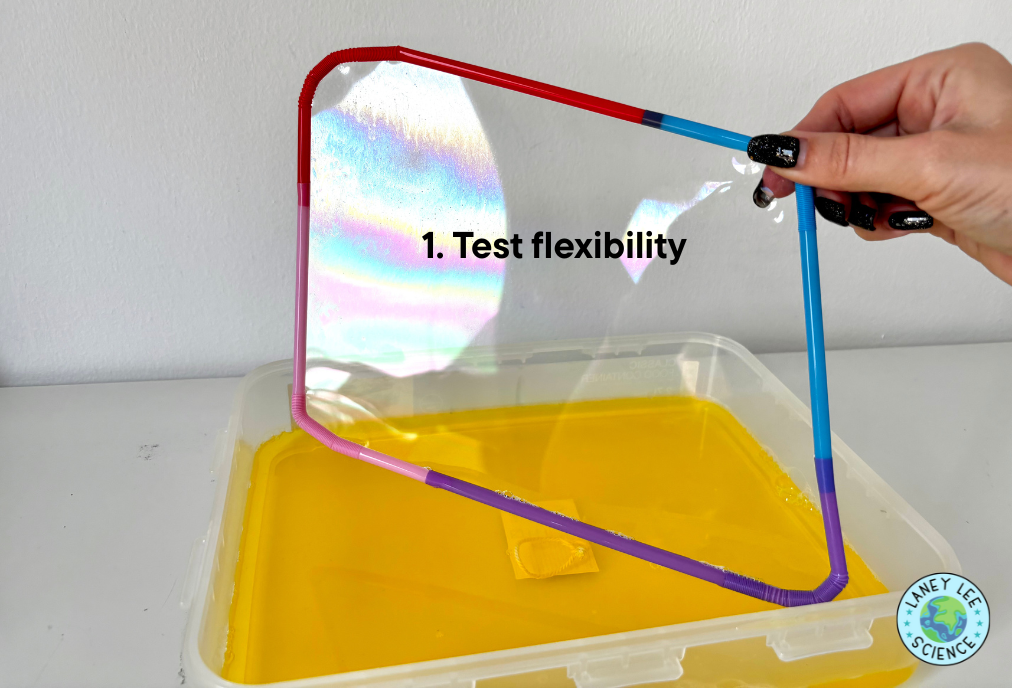
Concept 1: Flexibility Students observe how the bubble film bends, stretches, and moves without breaking, modeling the flexibility of real cell membranes.
Concept 2: Self-Repair Students test what happens when they touch the membrane with a wet vs. dry finger, showing how membranes can reseal small punctures.
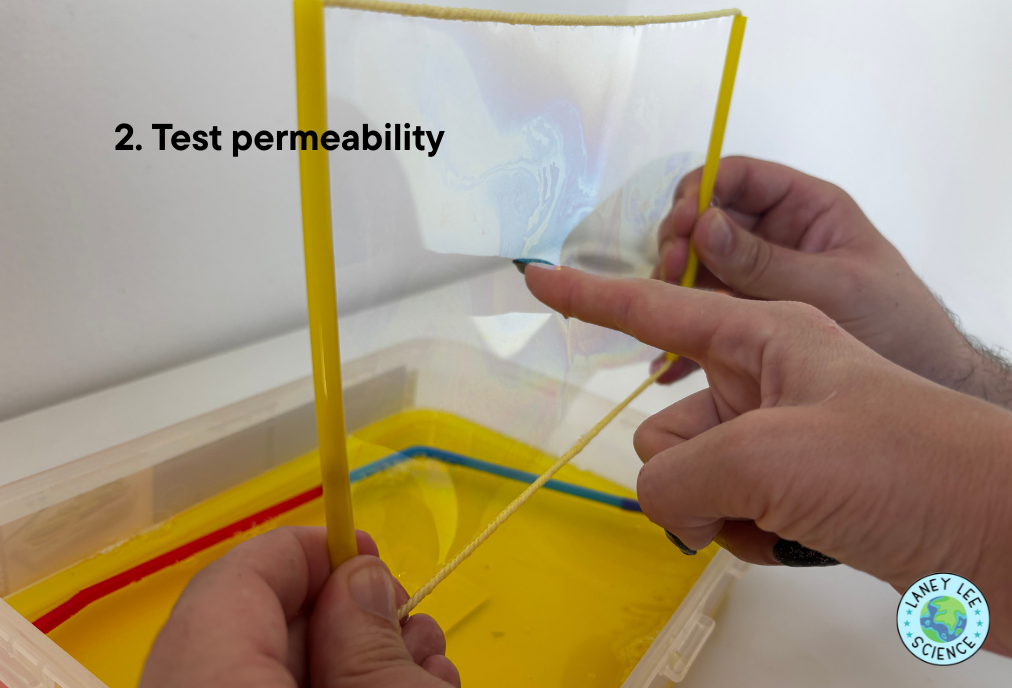
Concept 3: Permeability Students use a variety of on-hand materials (pencils, paperclips, straws, etc.) to test which are able to pass through the membrane and which are not (causing the bubble to pop).
Concept 4: Channel Proteins and Pores By creating a “hole” in the film with a coated thread loop, students model how channel proteins let materials move in and out of cells without breaking the membrane. I recommend using verrrry thin thread for this part! Only students with a steady hand will be able to complete this portion of the lab.
Laney’s Tips for Success
Use the largest pan you can find for the bubble solution. Mine was a bit small, and I found it more difficult to create perfect bubbles that way.
Groups or pairs are essential this lab! Someone needs to hold the bubble frame while someone else tests permeability.
Conclusion
The cell membrane bubble lab is a crowd favorite because it transforms invisible biology into something tangible and memorable. Students walk away understanding that cell membranes aren’t rigid walls, they’re dynamic, flexible, and self-healing barriers that make life possible.
Whether you’re introducing the cell membrane for the first time or reinforcing key concepts before an assessment, this lab helps your students see biology in action, one bubble at a time.